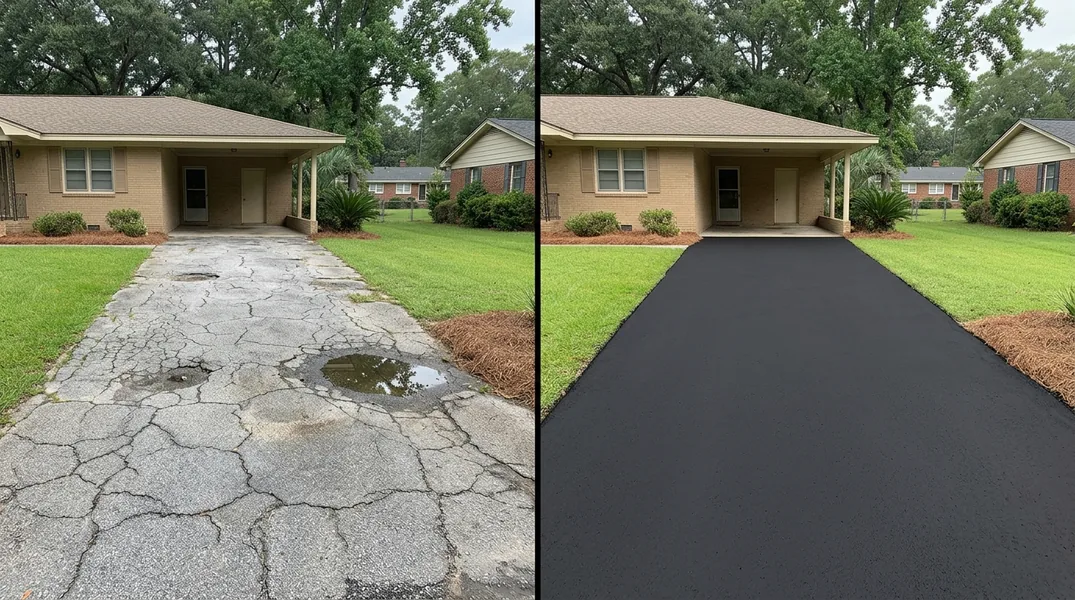
Understanding Asphalt vs Concrete Driveway Performance in Heat
When you're choosing between an asphalt and concrete driveway for your home in Columbia, one critical factor that often gets overlooked is how each material responds to extreme heat. Columbia experiences some of the hottest summers in South Carolina, with temperatures regularly climbing into the low 90s and occasionally pushing higher. This kind of sustained heat puts real stress on your driveway, and the material you choose will determine how well it holds up year after year.
Asphalt and concrete are fundamentally different materials with different thermal properties. Asphalt is a dark, flexible material made from bitumen and aggregate, while concrete is a rigid, light-colored mixture of cement, sand, and stone. These differences matter tremendously when temperatures soar. Understanding how each performs in heat will help you make an informed decision that protects your investment and keeps your driveway looking good for years to come.
How Asphalt Handles Columbia's Hot Summers
Asphalt's dark color is both an advantage and a challenge in hot climates. While the dark surface absorbs more heat than concrete, this flexibility is actually what makes asphalt excel in extreme temperatures. Asphalt remains somewhat pliable even when hot, which allows it to expand and contract with temperature fluctuations without cracking. In Columbia's intense summer heat, this flexibility prevents the kind of structural stress that can damage more rigid materials.
The Asphalt Driveway Paving & Installation process creates a surface that naturally accommodates the movement caused by thermal expansion. When temperatures rise, asphalt expands gracefully. When they cool, it contracts without the brittle cracking you might see in concrete. However, this same flexibility means asphalt can soften slightly in extreme heat, which is why proper installation and maintenance are critical. A well-installed asphalt driveway will remain stable and safe even during the hottest days of summer.
The asphalt driveway lifespan in a hot climate like Columbia typically ranges from 15 to 20 years with proper care. The heat does accelerate oxidation of the bitumen, which is why regular seal coating every two to three years becomes even more important in hotter regions. This maintenance helps protect the asphalt from UV damage and keeps it looking fresh while extending its overall lifespan.
Concrete Driveways and Heat Related Challenges
Concrete's light color makes it more reflective than asphalt, which means it absorbs less solar heat. This seems like an advantage at first, and it does help keep concrete cooler to the touch on hot days. However, concrete's rigidity becomes a real problem in climates with significant temperature swings. When concrete heats up during the day and cools at night, it expands and contracts, but unlike asphalt, it does so in a brittle manner that can lead to cracking.
In Columbia's hot summers, concrete driveways are particularly vulnerable to thermal stress cracking. These cracks often start small but can grow quickly, especially if water seeps in and freezes during the occasional cold snap. Once concrete cracks, the damage tends to accelerate because water can penetrate deeper into the material, causing further deterioration. Additionally, concrete can develop surface spalling where the top layer flakes away, and it's susceptible to efflorescence, a white powdery coating that appears when salts are drawn to the surface.
While concrete typically lasts 25 to 30 years in ideal conditions, the combination of extreme heat, UV exposure, and the occasional freeze-thaw cycle in Columbia can significantly reduce that lifespan. Concrete also requires regular sealing to prevent staining and deterioration, and repairs can be costly and visually obvious when patches are needed.
Asphalt Over Concrete Driveway: Is It a Good Option?
Many homeowners in Columbia with failing concrete driveways ask whether they can simply overlay asphalt over their existing concrete. The answer is yes, but it requires careful consideration and proper preparation. Asphalt Resurfacing & Overlay can be a cost-effective solution, especially if your concrete is structurally sound but just showing signs of age or minor damage.
However, an asphalt over concrete driveway isn't a one-size-fits-all solution. The concrete base must be properly cleaned, repaired, and primed before asphalt is applied. If the concrete has significant cracks or structural issues, these problems can eventually telegraph through to the new asphalt layer. In Columbia's hot climate, the thermal stress that damaged the concrete could also affect the asphalt overlay if the base isn't properly prepared. When done correctly, though, overlaying asphalt over concrete can give you a fresh, durable surface that handles heat better than the original concrete did.
The key is working with experienced professionals who understand the specific challenges of overlaying in hot climates. Columbia Asphalt Paving has the expertise to assess whether your concrete is suitable for overlay and to execute the installation properly. If you're considering this option, get a free estimate to understand what your specific situation requires.
Maintenance Needs: Asphalt vs Concrete in Hot Climates
Maintenance requirements differ significantly between asphalt and concrete, especially in a hot place like Columbia. Asphalt requires more frequent attention, but the maintenance is typically straightforward and affordable. Regular seal coating protects the surface from UV damage and oxidation, which are accelerated by summer heat. You should seal coat asphalt every two to three years, and you'll need to fill any small cracks promptly to prevent them from expanding.
Concrete maintenance is less frequent but can be more expensive when problems arise. You'll need to seal concrete periodically, typically every one to three years, and you must address any cracks immediately to prevent water infiltration. Once concrete develops significant damage, repairs often require professional help and can be costly. The good news is that concrete doesn't need the regular seal coating that asphalt does, so your annual maintenance schedule is lighter. However, the reactive repairs tend to be more expensive when they're needed.
If minor damage does occur to your asphalt driveway, Pothole Repair & Asphalt Patching is quick and affordable. Addressing these issues promptly prevents them from growing into larger problems that require more extensive work. Driveway Repair services are readily available in Columbia, and catching small issues early keeps your maintenance costs low.
Cost Considerations: Asphalt vs Concrete Installation and Long-Term Value
When evaluating asphalt versus concrete, the initial installation cost is often the first consideration. Generally, asphalt is less expensive to install than concrete, which makes it an attractive option for homeowners on a budget. However, the true cost picture extends far beyond the initial installation. You need to consider maintenance costs, repair expenses, and how long the driveway will actually last in Columbia's climate.
While concrete has a higher upfront cost, some homeowners justify it by assuming they won't need to maintain it as much. In reality, concrete in hot climates requires regular sealing and can develop expensive problems that asphalt wouldn't face. When you factor in seal coating every two to three years, crack repairs, and potential spalling or efflorescence treatments, the long-term cost of concrete can rival or exceed that of asphalt. Asphalt's lower initial cost combined with straightforward maintenance makes it an excellent value proposition for most Columbia homeowners.
For specific pricing information tailored to your project, Columbia Asphalt Paving provides transparent pricing and detailed estimates. Call (803) 661-0887 or request a free estimate to get an accurate quote for your driveway project and understand the full cost picture for both materials.
Making Your Decision: Which Material is Right for Your Columbia Home
Choosing between asphalt and concrete ultimately depends on your priorities, budget, and long-term plans. If you value lower initial cost, easier maintenance, and superior performance in extreme heat, asphalt is the clear winner for Columbia homeowners. The flexibility of asphalt makes it naturally suited to the thermal stress of hot summers, and the maintenance is straightforward and affordable. An asphalt driveway will serve you well for 15 to 20 years with proper care, and repairs are simple and cost-effective.
Concrete might be worth considering if you prefer a more formal appearance, plan to stay in your home for many decades, and are willing to invest in regular professional maintenance. However, in Columbia's hot climate, the advantages of concrete diminish significantly. The thermal stress, UV exposure, and occasional freeze-thaw cycles can shorten its lifespan and lead to expensive repairs.
The experienced team at Columbia Asphalt Paving understands the unique demands of driveways in our region. Whether you're installing a new Asphalt Driveway Paving & Installation, considering an overlay, or need repairs to an existing surface, we're here to help. Contact Columbia Asphalt Paving at (803) 661-0887 to discuss your driveway needs and get expert guidance on the best solution for your home.
Looking for a professional asphalt paving contractor in Columbia? Columbia Asphalt Paving responds fast for all your asphalt paving needs.
Get a Free Quote